
Last updated November 25, 2026
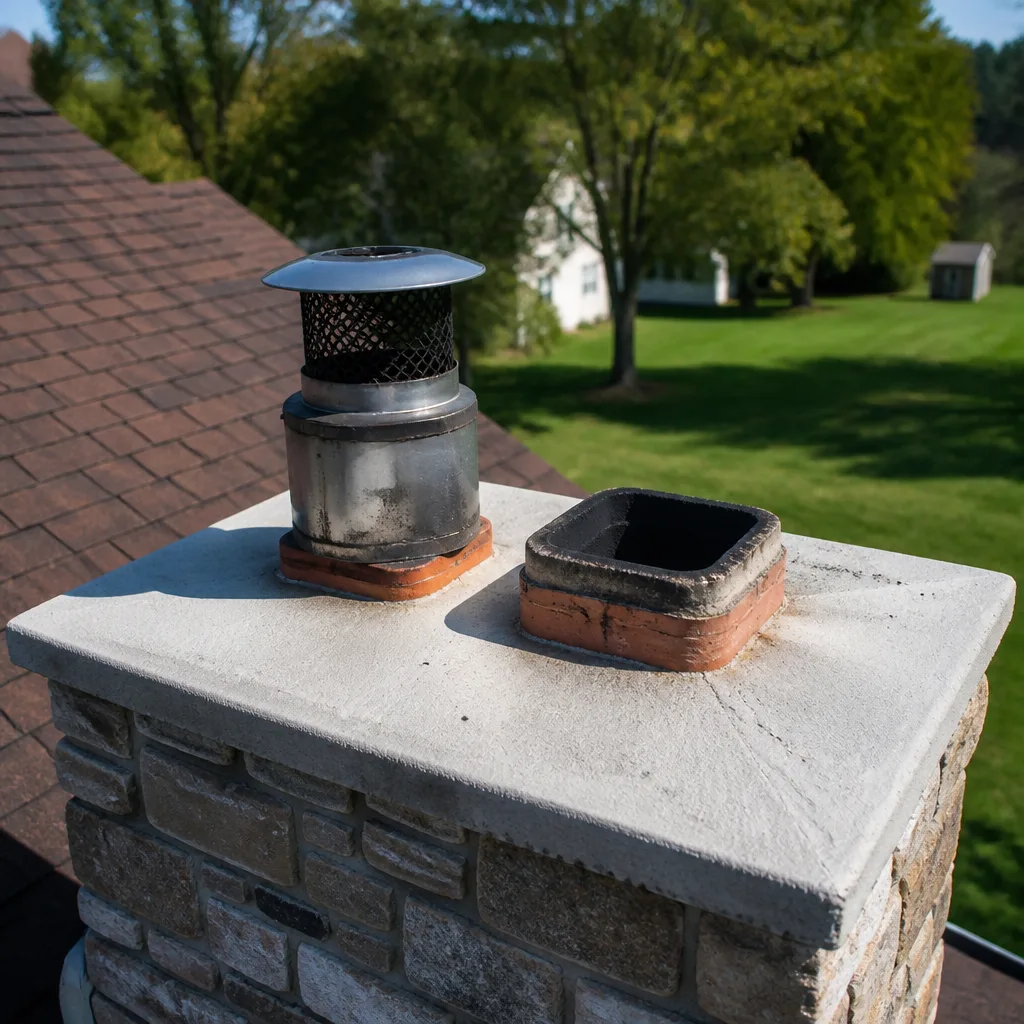 Sweep & inspection
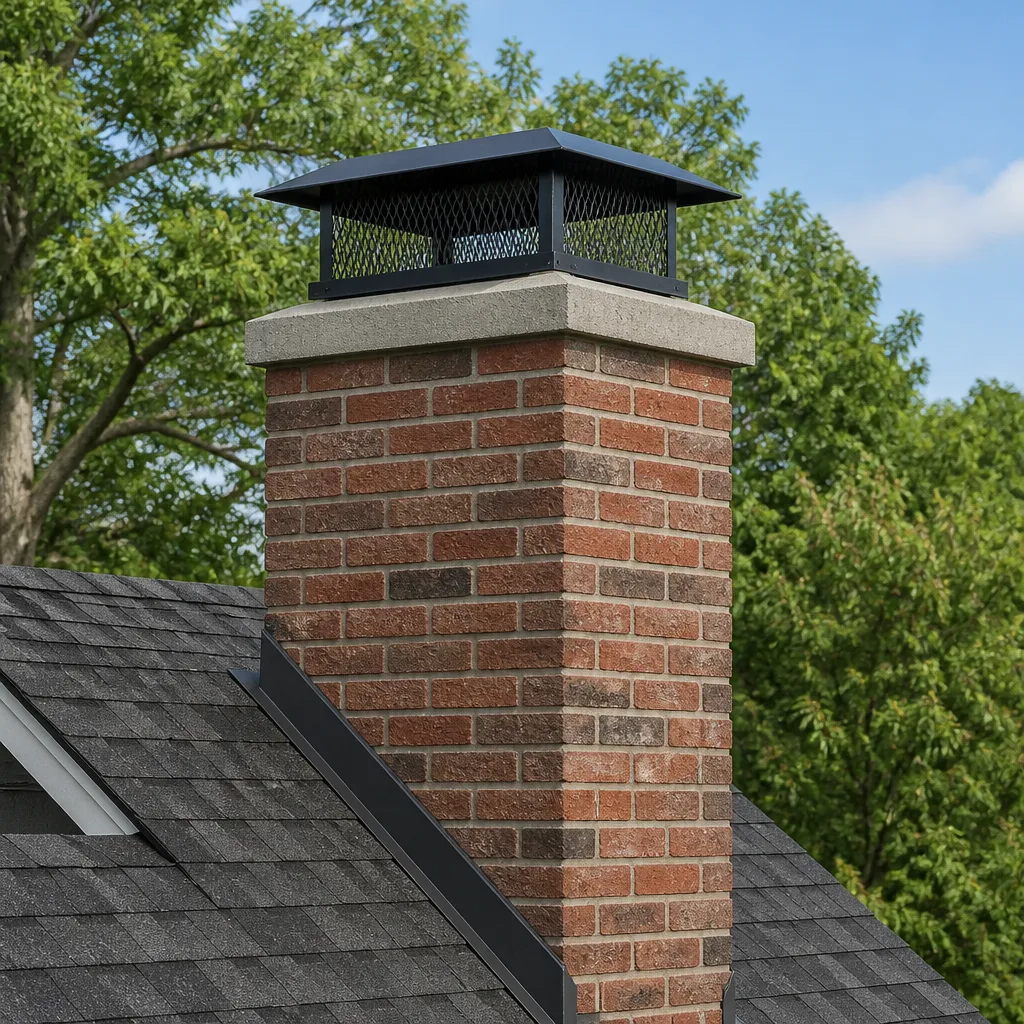 Caps & crowns
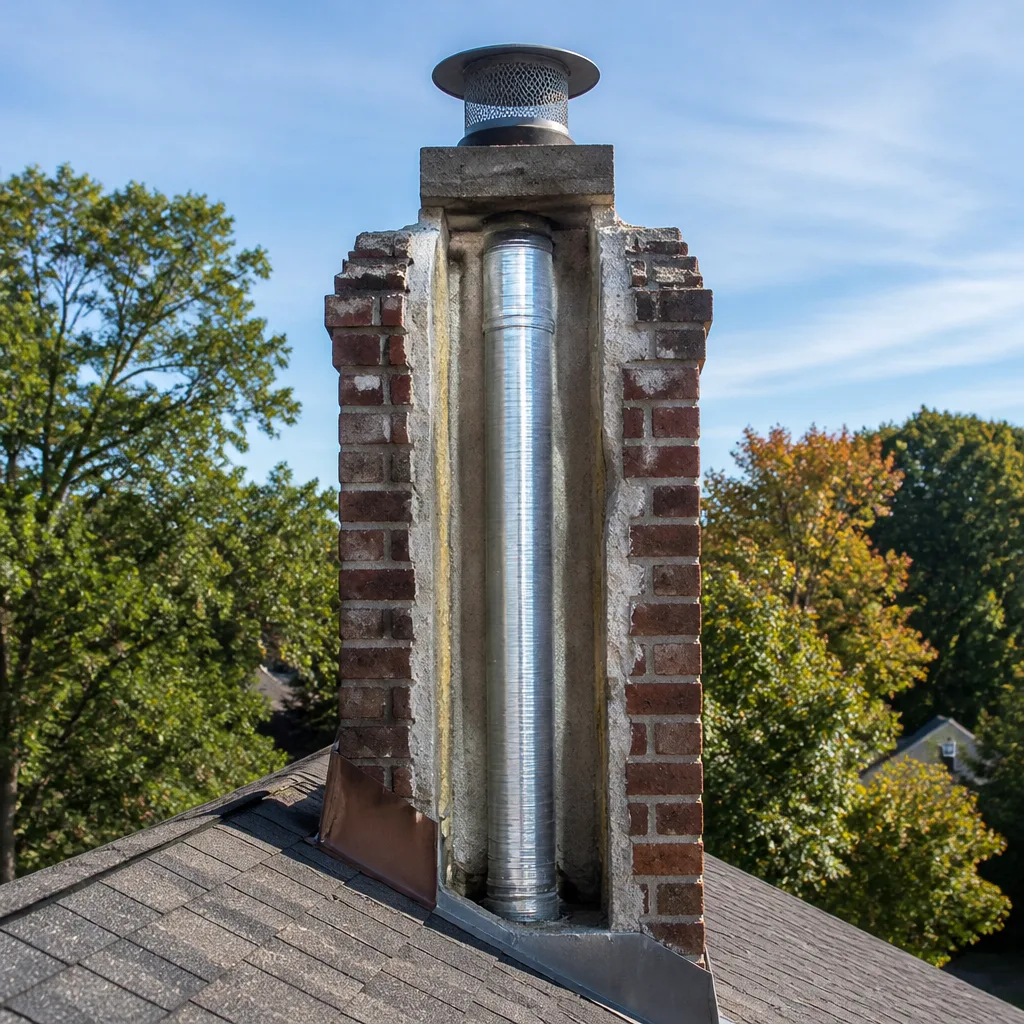 Flue relining
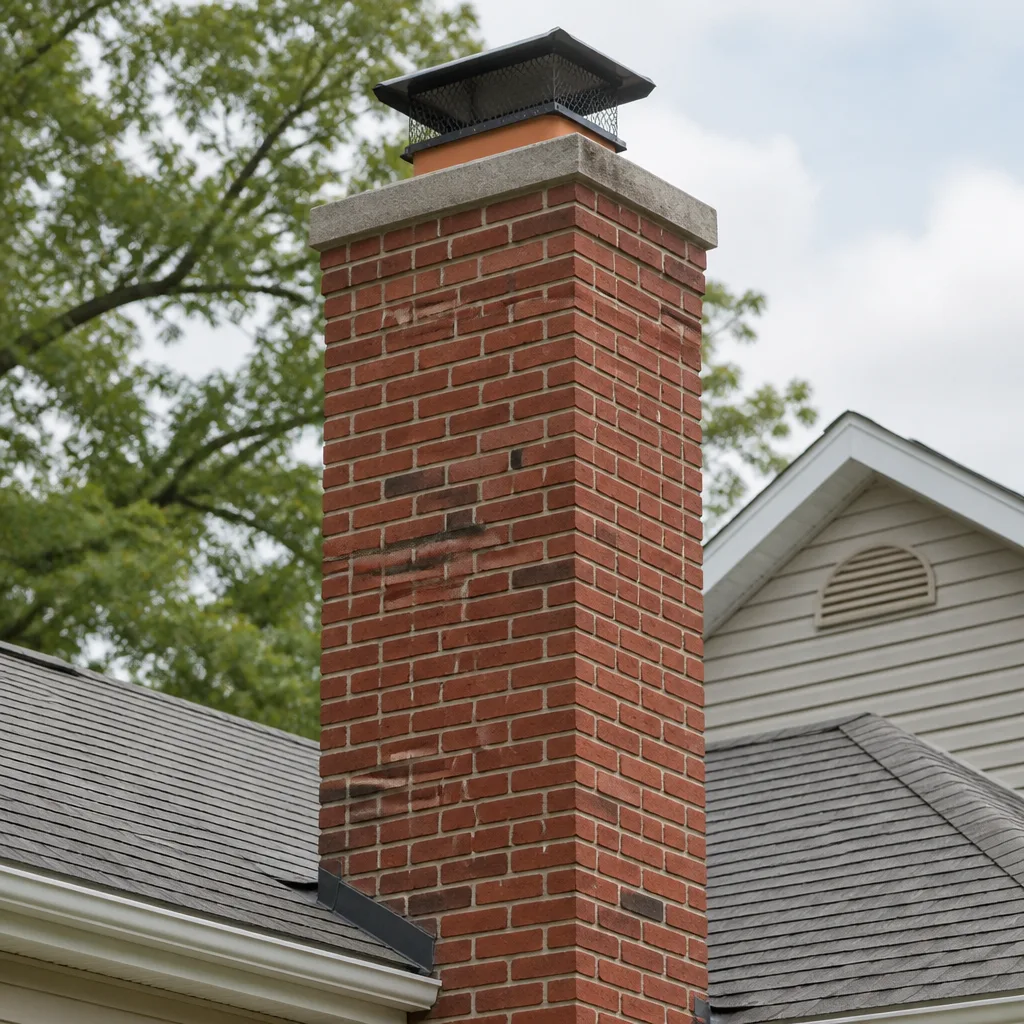 Masonry repair
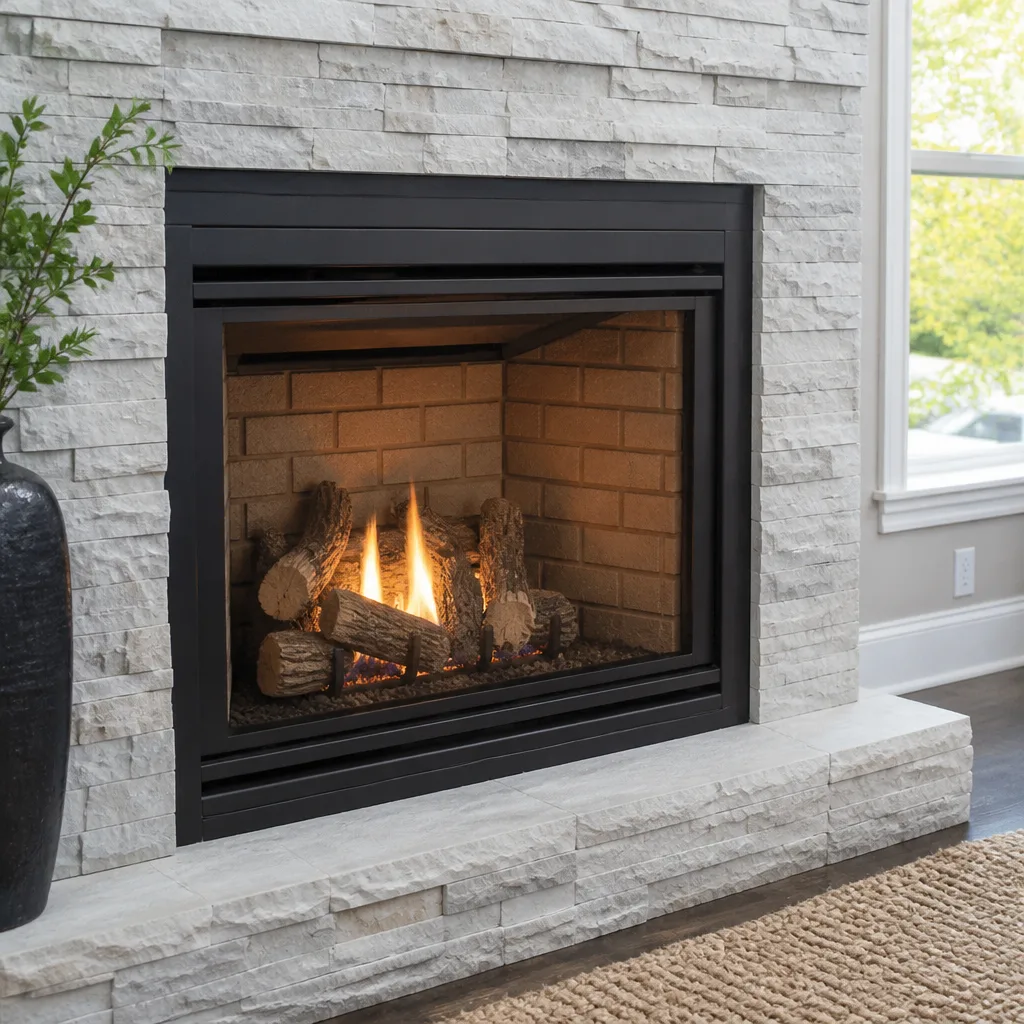 Gas fireplace service
Level 1 sweep and inspection to the NFPA 211 annual standard - flue, crown, cap, and flashing checked and photographed
Chimney sweep logs do not sweep chimneys. They loosen some creosote - which then falls where a brush and vacuum still have to collect it.
Chimney Cleaning Warning Signs: A Hell’s Kitchen Homeowner’s Reference Guide
A white stain running down the outside of your chimney isn’t cosmetic. It’s efflorescence, and it means water is moving through your masonry, dissolving mineral salts, and depositing them on the surface as it evaporates. By the time you see white streaks on the brick, water has already been inside your flue system. Most of the warning signs we get called about in Hell’s Kitchen fall into that same category: signals homeowners read as minor annoyances when they’re actually specific diagnostics. A smoky smell, a stiff damper, discoloration above the mantel. Each one points to an identifiable component failure. This guide decodes those signals one component at a time, so you know what you’re looking at before anyone quotes you a repair.
Quick Answer
The main chimney cleaning warning signs are a strong creosote or sooty odor in the room, smoke spilling back into the house instead of drafting up, white efflorescence staining or dark streaks on the exterior brick, rust or water marks inside the firebox, a damper that sticks or won’t seal, and soot above the firebox opening. Any one of these means the system needs an inspection, not just a brush. Three signs are emergency territory and warrant a call before you burn again: active water intrusion, visible daylight through the firebox, and fire marks above the firebox opening.
Styles & brands we work with
- Sweep & inspection
- Caps & crowns
- Flue relining
- Masonry repair
- Gas fireplace service
Table of Contents
- Warning Signs Decoded: A Symptom-to-Cause Reference
- Signs You Need Cleaning Versus Signs You Need Repair
- Why Backdrafting in Hell’s Kitchen Rowhouses Is Usually a Pressure Problem
- The Cracked Clay Tile Signature in Pre-War Hell’s Kitchen Buildings
- Gas Fireplace Warning Signs That Are Not Cosmetic
- Warning Signs That Have Already Become Emergencies
- How to Check Your Own Chimney: What to Look For
- The Exterior Signs Homeowners Miss Most
Warning Signs Decoded: A Symptom-to-Cause Reference
Treat this section as your translation table. The sign you notice is almost never the component that’s failing; it’s the downstream effect. Knowing which component to look at saves you from paying for a cleaning that fixes nothing.
| What You Notice | What It Usually Indicates | Which Component |
|---|---|---|
| Sharp, acrid smell even when the fireplace is cold | Creosote buildup or a downdraft pulling soot odor into the room | Flue interior or termination height |
| Smoke rolls out the top of the firebox on light-up | Blocked flue, undersized flue, or negative pressure in the building | Flue, cap screen, or house pressure |
| White powdery staining on exterior brick | Water migrating through masonry (efflorescence) | Crown, cap, flashing, or mortar joints |
| Dark vertical streaks on the chimney face | Water tracking through a failed crown or missing cap | Crown or cap |
| Rust flakes or water stains inside the firebox | Water entering from above | Crown, cap, or flashing |
| Soot above the firebox opening | Incomplete combustion or a gas fireplace burning wrong | Burner, venting, or draft |
| Damper that drags, sticks, or won’t sit flush | Warped damper frame or corrosion from moisture | Damper assembly |
| Yellow or orange gas pilot flame, soot on gas logs | Incomplete combustion in a gas unit | Burner, air shutter, or venting |
| Gritty rubble on the smoke shelf or hearth | Deteriorating flue tile or mortar | Clay tile liner or mortar joints |
Two rules of thumb make this table useful. First, water signs almost always travel from the top down; if you see staining low on the stack, look higher for the entry point. Second, odor and smoke behavior point inward, toward the flue and the pressure around it, while stains and spalling point outward, toward the crown, cap, and flashing. In Hell’s Kitchen, where most chimneys run up through shared rowhouse masonry, a water problem on one stack often affects the adjacent party wall, so the diagnosis needs to look at the whole structure, not just the flue you use.
Signs You Need Cleaning Versus Signs You Need Repair
This is the distinction that saves Hell’s Kitchen homeowners the most money. A cleaning removes buildup; a repair fixes a broken part. Confusing the two is why some people pay for a sweep and still have smoke in the room the next month.
Signs you most likely need cleaning only:
- You burn regularly and it’s been more than a year since the last sweep.
- You can see a rough, crusty layer on the flue walls with a flashlight.
- The fireplace drafts fine once the fire is hot, but smells smoky when cold.
- You use manufactured logs or resinous softwoods and burn often.
Signs the problem is structural, not buildup:
- Smoke rolls back regardless of how hot the fire is.
- Water stains or efflorescence on the exterior or inside the firebox.
- Rubble or grit collecting on the smoke shelf.
- A damper that won’t operate smoothly.
- Daylight or a bright halo visible where the firebox meets the flue.
If you’re in the second group, a standard sweep will clean the flue and leave the failure in place. Our Chimney Sweep Hell’s Kitchen work always starts with an inspection so the distinction gets made before any money changes hands. In a Hell’s Kitchen rowhouse, an inspection also needs to account for how your flue is shared or abutting neighboring masonry, because a crack in one stack can let smoke or water cross into a space you don’t control.
Why Backdrafting in Hell’s Kitchen Rowhouses Is Usually a Pressure Problem
Backdrafting is smoke spilling down or into the room instead of rising up the flue. Homeowners assume it means the chimney is dirty. Often it doesn’t. In Hell’s Kitchen rowhouses and converted walk-ups, the chimney competes with a tight building envelope, a kitchen exhaust fan, a bathroom fan, or a dryer vent for the air it needs to draft. The flue isn’t blocked; the house is pulling harder than the chimney can push.
You can tell the difference before you pay for a cleaning:
- Light a small test fire with no exhaust fans running anywhere in the apartment. If it drafts cleanly, the flue is open and the problem is pressure, not blockage.
- Turn on the kitchen or bathroom exhaust fan and watch the smoke. If it reverses or slows, you’ve confirmed a pressure issue.
- Check whether the smoking happens on light-up only or throughout the burn. Light-up smoke that clears as the flue warms is normal; continuous spill is not.
- Note whether the problem is worse on windy days or when a neighboring unit is running appliances. That points to shared or competing draft.
A professional inspection adds the tools a homeowner can’t replicate: a camera run to confirm the flue is actually clear, a check of the cap and screen for partial blockage, and a look at the termination height relative to the roofline. If the camera shows a clean flue and the smoke still rolls, the fix is draft and pressure, not brushing. This is where an inspection-first approach earns its keep. We’ve seen plenty of Hell’s Kitchen units where the flue was spotless and the smoke was coming from a pressure problem a cleaning would never have touched.
The Cracked Clay Tile Signature in Pre-War Hell’s Kitchen Buildings
Many Hell’s Kitchen buildings went up before mid-century, when flues were lined with stacked clay tiles. Those tiles are durable but not flexible, and decades of heating and cooling cycles cause them to crack in a recognizable pattern. The crack usually appears where the tile meets the next tile, at a joint, and it often starts on the firebox side of the flue.
Here’s what the failure looks like from where you can actually see it, standing at the firebox:
- Hairline cracks running vertically or diagonally along the firebox back wall.
- A bright line of daylight or reflected light where the firebox meets the flue throat, which can be a broken tile or a failed joint.
- Crumbling mortar at the joints, with gritty material dropping onto the smoke shelf.
- Spalling: tile faces flaking or peeling off in thin layers.
Why is this pattern so common in pre-war construction? Old flues were built for coal and early wood fires, with thinner tile and different geometry than modern codes expect. Over time, the tiles crack from thermal stress, and once a crack opens, water and creosote get behind the tile and accelerate the failure. A cracked tile isn’t a cleaning problem; it’s a barrier problem, because the flue liner is what separates combustion gases from the masonry and the rest of the building.
When a liner is cracked and deteriorating, there are more options than a full reline. HeatShield ceramic resurfacing restores a deteriorated flue from the inside, and it’s a capability we’ve built our repair work around because it addresses the structure without tearing out the whole stack. If the damage is too extensive for resurfacing, a DuraFlex stainless liner is the durable path. Both are materials from the professional trade brands we install, and both decisions should come after a camera inspection, not before.
Gas Fireplace Warning Signs That Are Not Cosmetic
Gas fireplaces get treated as low-maintenance because there’s no ash and no wood smoke, but the failure modes are different and some are more urgent than anything a wood fireplace produces. A yellow or orange standing pilot flame, soot above the firebox opening, or soot on the logs are not cosmetics. They mean the burner is burning rich, and a rich burn can produce carbon monoxide.
Wood-burning and gas warning signs diverge in specific ways:
| Sign | Wood-Burning Meaning | Gas Meaning |
|---|---|---|
| Soot above firebox | Often draft or moisture-related | Incomplete combustion; check burner and venting |
| Odor when cold | Creosote smell from the flue | Gas odor or venting problem; treat as urgent |
| Flame color | Not applicable | Blue is correct; yellow or orange signals incomplete burn |
| Pilot behavior | Not applicable | A flickering or lifted pilot can indicate venting issues |
| Moisture inside glass or firebox | Water intrusion from the top | Venting or condensation problem |
A gas fireplace also has no creosote, so a cleaning won’t fix a yellow flame. The work is diagnosis: check the burner, the air shutter, the venting, and the termination. If you smell gas at any point, leave the unit off and treat it as an emergency. For the broader picture of what a full sweep and inspection covers on either type of fireplace, our chimney sweep page explains the process. In Hell’s Kitchen, where many gas fireplaces were retrofitted into older masonry fireboxes, the venting path is often the weak link, and it’s the first thing an inspection should look at.
Warning Signs That Have Already Become Emergencies
Most warning signs give you time to schedule an inspection. A few don’t. These three mean the problem has crossed from maintenance into an active hazard, and you should stop using the fireplace until a professional has been out.
- Active water intrusion. Water is coming into the firebox or down the flue, not just staining the exterior. Active intrusion means the crown, cap, or flashing has failed, and every burn you run pushes moisture and gases into masonry that’s already saturated. Stop burning and get it looked at.
- Visible daylight through the firebox. If you can see light through a joint, crack, or the flue throat where light shouldn’t pass, the barrier between the firebox and the structure is compromised. That’s a safety stop, not a cleaning item.
- Fire marks above the firebox opening. Scorching, charring, or smoke staining directly above the opening means heat or flame is escaping where it shouldn’t. This is the one that most often gets explained away as “just a little smoke stain” and shouldn’t be.
There’s a fourth category worth naming even though it’s less dramatic: a gas smell near a gas fireplace, or a pilot that keeps extinguishing. Venting that isn’t carrying exhaust away can put carbon monoxide into the room, and carbon monoxide gives no warning of its own. If any of these apply, call (866) 947-8139. We answer 24/7. Fast dispatch from 7am to 7pm, Sunday through Friday.
How to Check Your Own Chimney: What to Look For
We don’t recommend anyone get on a roof or inside a firebox doing repairs. But a homeowner can safely gather information that makes a professional visit more productive. Here’s the safe version of a self-check.
- Look up the firebox with a flashlight. Note cracks in the firebox walls, crumbling mortar, or rubble on the smoke shelf. Don’t reach inside.
- Operate the damper. Open and close it fully. A damper that drags, sticks, or won’t sit flush is a sign of warpage or corrosion.
- Smell the firebox when cold. A sharp, acrid smell is creosote or soot odor; note the strength and whether it’s worse on damp days.
- Watch a small test fire. See whether smoke rises cleanly or rolls into the room, and whether exhaust fans change the behavior.
- Walk the exterior at ground level. Look for white staining, dark streaks, cracked or missing mortar, a crown that’s cracked or flaking, and a missing or damaged cap.
- Note any water signs inside. Rust, white deposits, or dampness in the firebox is a top-down water story.
Bring those notes to the inspection. They tell us where to aim the camera and which component to scrutinize first. The camera inspection and photo report we include are the evidence that turns a guess into a diagnosis, and you should be able to see exactly what we see. Nothing gets recommended without that evidence. If a component can safely wait, we’ll say so.
The Exterior Signs Homeowners Miss Most
The most expensive chimney failures usually start at the top. The crown is the concrete or masonry cap that sheds water across the top of the chimney, and the cap covers the flue opening. Together they’re the first line of defense, and they’re the first thing to fail. When the crown cracks, water gets into the masonry, freezes, expands, and opens the crack wider. When the cap is missing or damaged, rain and animals go straight into the flue.
Exterior signs that deserve a call:
- White, powdery efflorescence on the brick, which means water is moving through the masonry.
- Dark vertical streaks on the chimney face, which is water tracking through a failed crown or missing cap.
- A crown with visible cracks, flaking, or a gap at the flue.
- Missing, loose, or rusted cap and spark screen.
- Crumbling mortar joints between bricks, which widen as water freezes in them.
- A leaning or separated chimney stack, which needs prompt attention.
Cap and crown work is the highest-leverage repair on the whole chimney because it’s preventive. It’s also the work many sweep-only operations skip or subcontract, which is why we treat it as one of our core service lines. Our chimney cap & crown page covers what a proper install involves. In Hell’s Kitchen, where stacks rise through shared rowhouse masonry and party walls, water that enters one chimney crown can migrate into neighboring structures, so this isn’t a cosmetic exterior fix.
Common Mistakes to Avoid
- Treating efflorescence as cosmetic. White staining means water is already inside the masonry. Painting over it traps the moisture and makes the damage worse.
- Paying for a cleaning when the flue is dirty because it’s cracked. Creosote accumulates faster on a damaged liner, so cleaning the symptom without fixing the structure just resets the clock.
- Assuming backdraft means a blocked flue. In Hell’s Kitchen rowhouses it’s often building pressure, and a cleaning won’t change it. The test is to light a fire with no exhaust fans running and see if the smoke still rolls.
- Ignoring a yellow gas pilot flame. A rich burn in a gas fireplace can produce carbon monoxide. It’s not a color preference; it’s a combustion problem.
- Waiting for the first cold snap. Chimney problems are cheaper to fix before the heating season than during it, and a pre-season inspection is when you can still plan the work.
- Letting a “cap” be skipped to save money. A missing cap lets rain, birds, and squirrels into the flue. It’s the cheapest protection on the whole system.
- Trusting a visual glance from the ground. A cracked clay tile and a compromised firebox throat are invisible from outside. The camera inspection is what catches them.
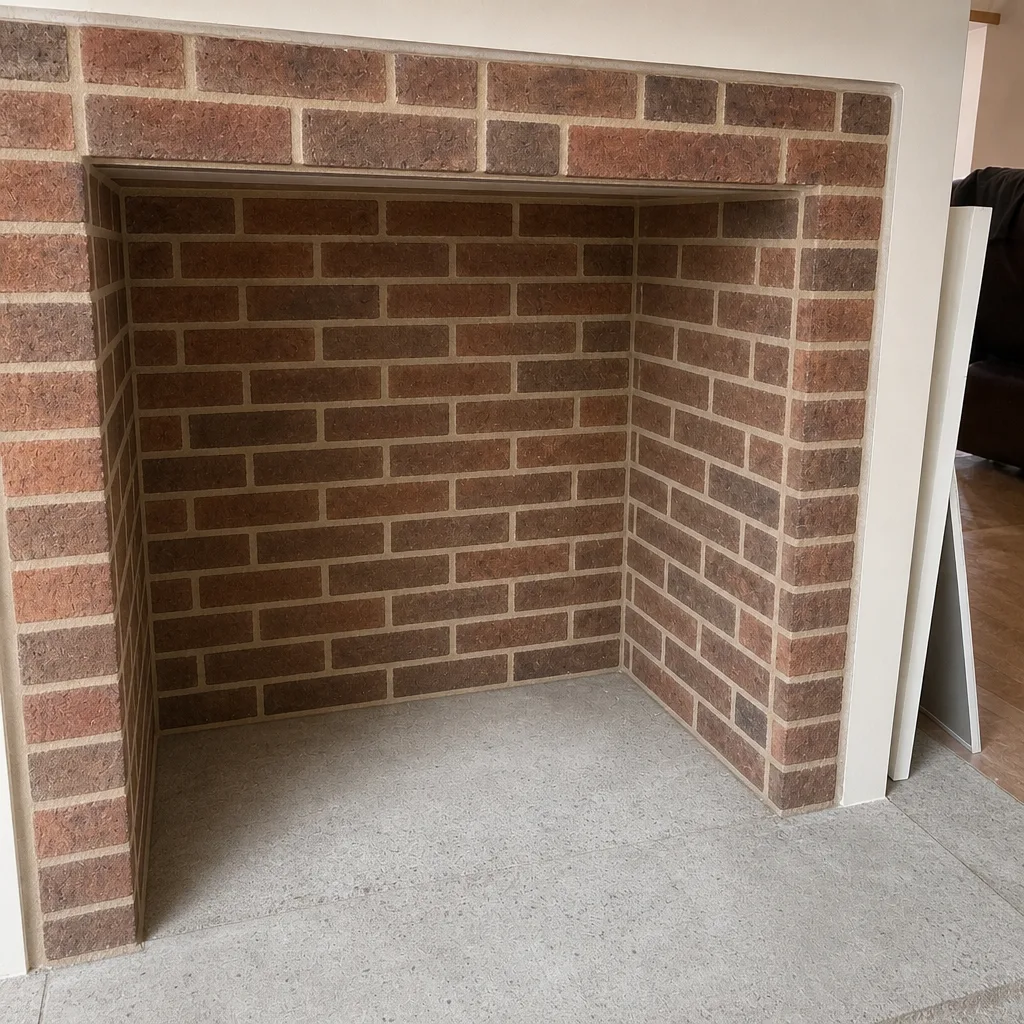
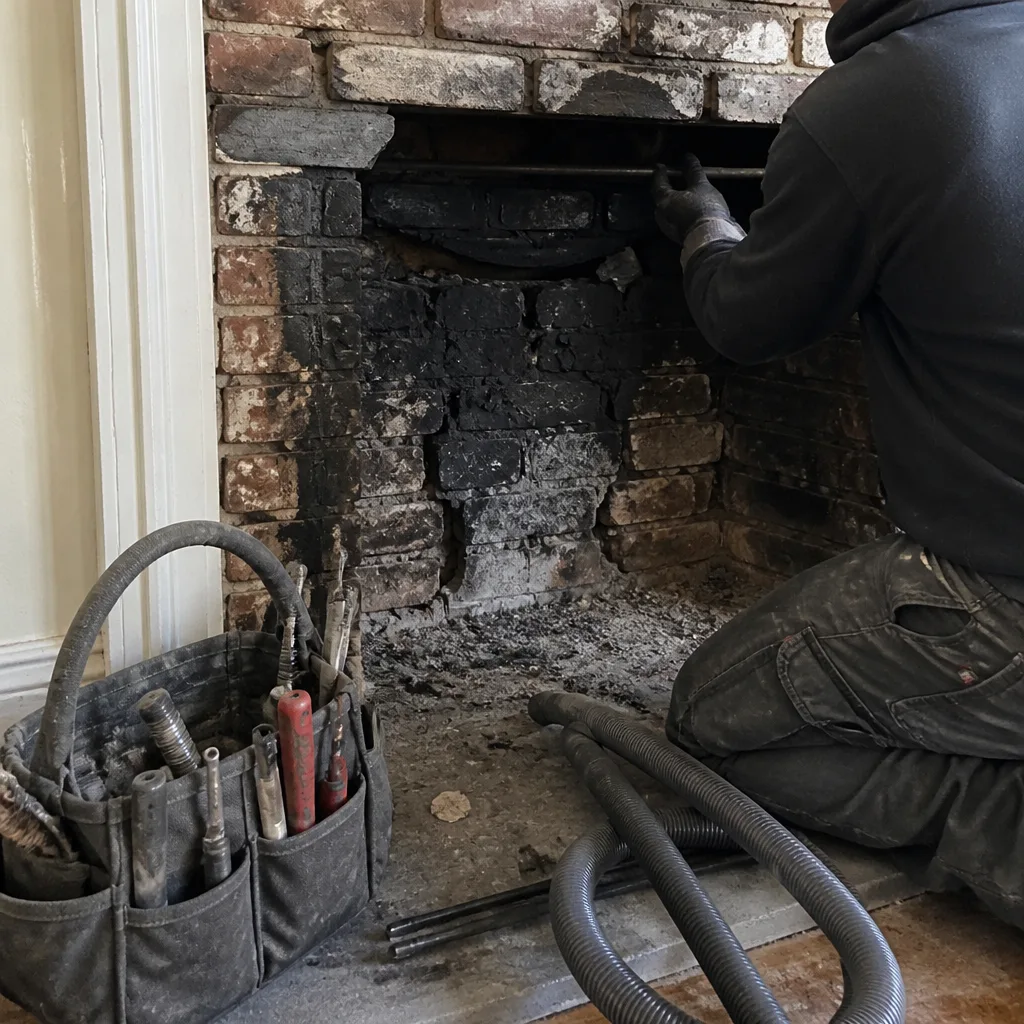
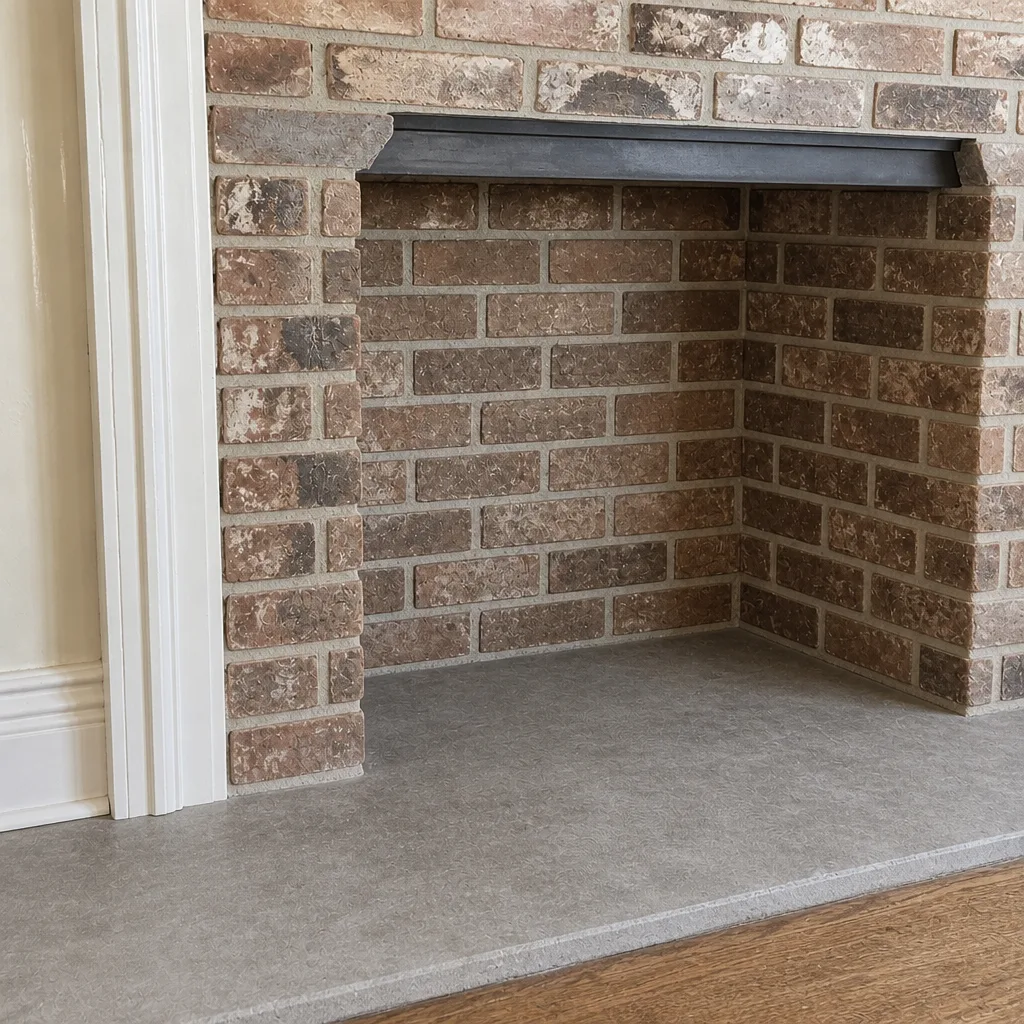
See the difference
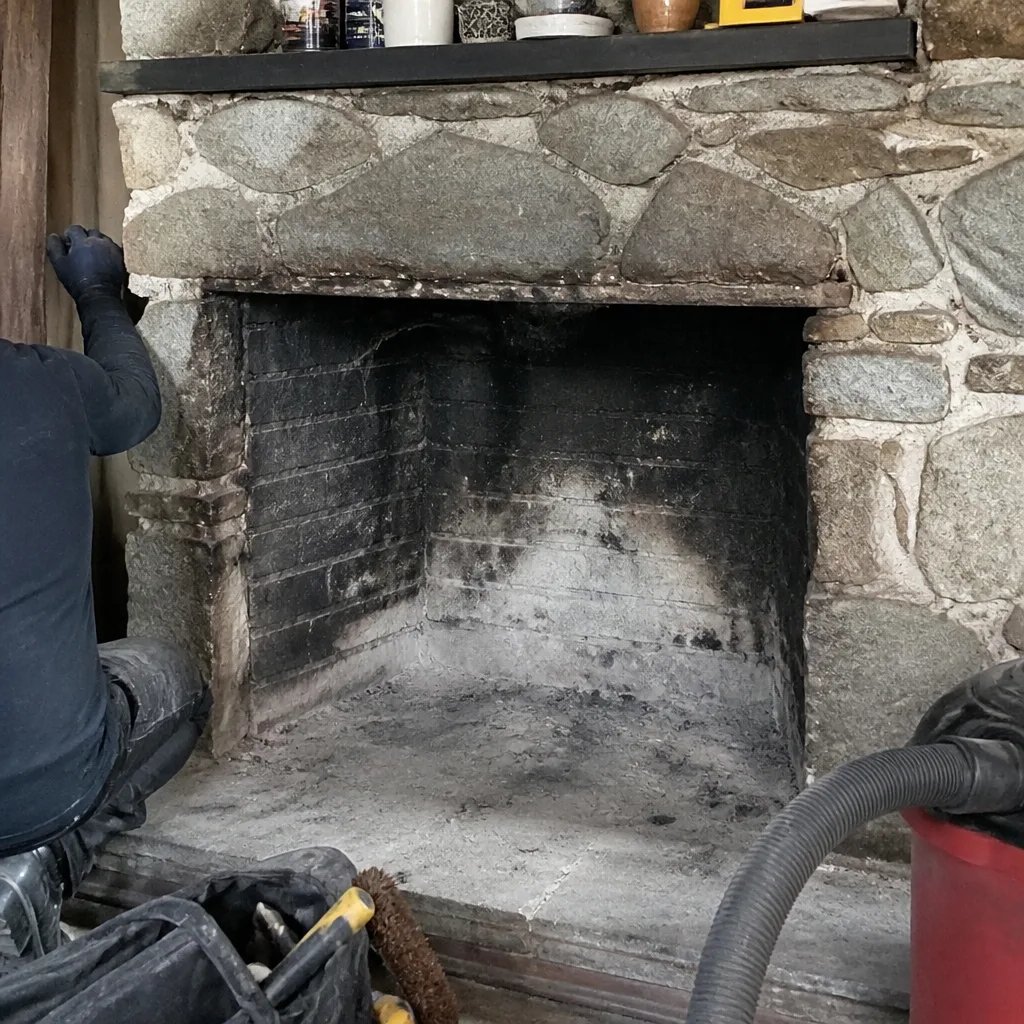 Before
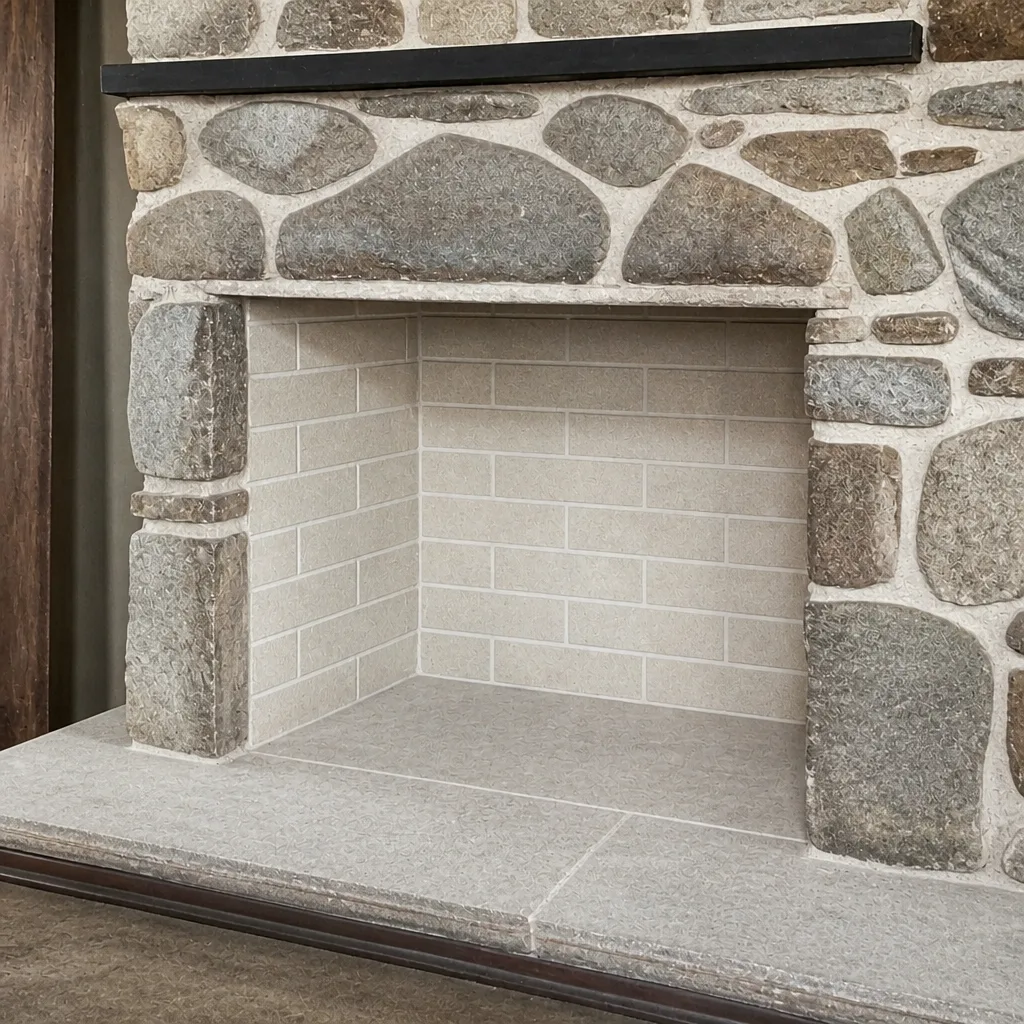 After
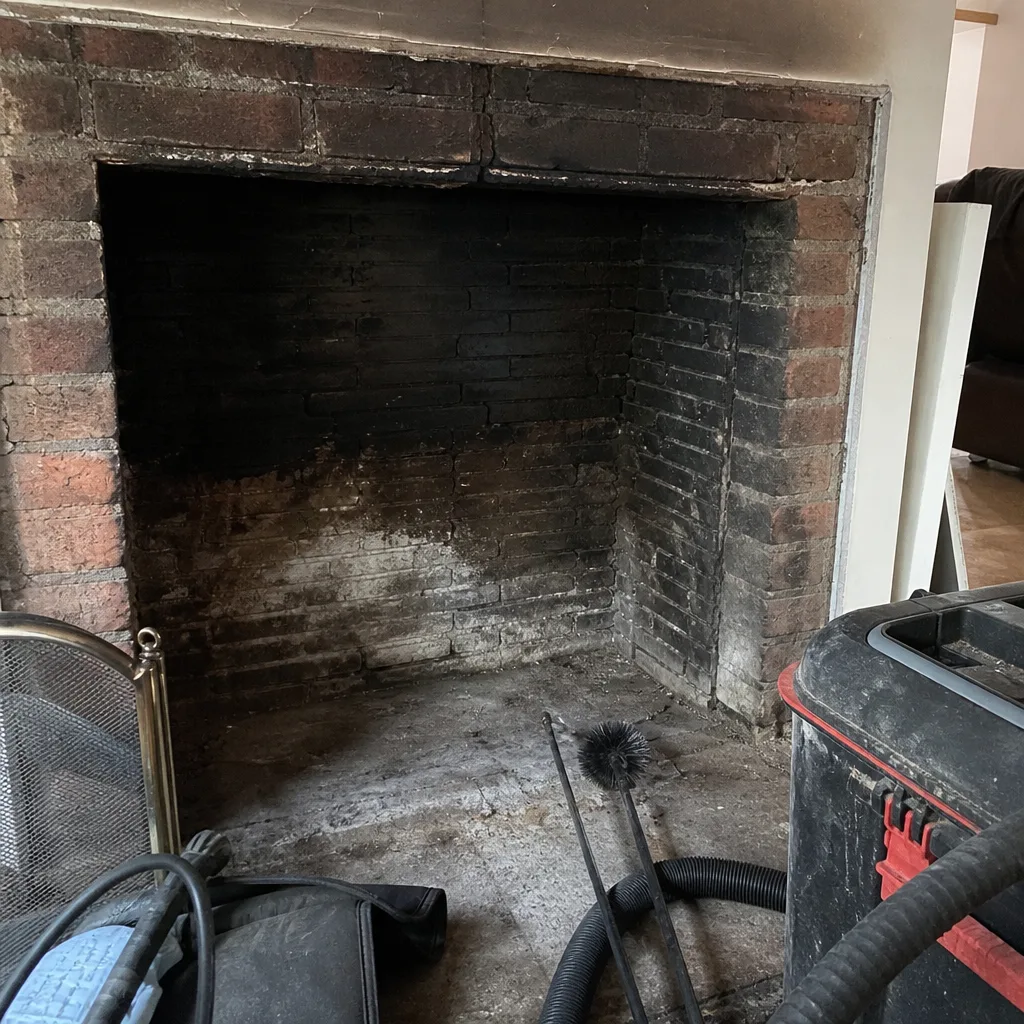 Before
 After
 Before
 After
When to Call a Professional
Call a professional when you have any of these: smoke rolling into the room on a clean, hot fire; water intrusion or efflorescence at the exterior; rubble on the smoke shelf; a damper that won’t operate smoothly; a yellow gas pilot flame or soot above the gas firebox; visible daylight through the firebox; or fire marks above the firebox opening. Those last three are emergency stops. If you’ve never had the chimney inspected, that’s its own reason to call, because the signs you can’t see from the ground are often the ones that matter most. Chimney Sweep Hell’s Kitchen offers free estimates in Hell’s Kitchen. Call (866) 947-8139. We answer 24/7. Fast dispatch from 7am to 7pm, Sunday through Friday.
Frequently Asked Questions
The most common signs are a strong creosote or sooty odor when the fireplace is cold, smoke spilling into the room instead of drafting up, white efflorescence staining on the exterior brick, rust or water marks inside the firebox, and a damper that sticks or won’t seal. Any one of these warrants an inspection rather than a cleaning alone. If you have two or more, the case for an inspection is stronger.
You need a cleaning if the problem is buildup on a structurally sound flue; you need a repair if the flue is cracked, the damper is warped, or water is entering the system. The way to tell is a camera inspection, which shows the flue interior and the firebox condition. A smoke test and a damper check add to the picture. Don’t guess between the two; the wrong service wastes money either way.
Because the cause is often building pressure, not a dirty flue. In Hell’s Kitchen rowhouses and converted walk-ups, kitchen and bath exhaust fans compete with the chimney for air, and a tight building envelope makes it worse. Test it by lighting a small fire with no fans running. If it drafts cleanly, the flue is open and the problem is pressure. That’s a draft problem a sweep won’t fix; an inspection that looks at termination height and pressure will locate the right solution.
Yes. White staining is efflorescence, and it means water is migrating through your masonry and depositing mineral salts on the surface. It’s not cosmetic, and it usually points to a failed crown, cap, or flashing. Painting over it traps moisture and makes the damage worse. Call for an inspection before the next freeze.
A yellow or orange pilot flame can mean the gas is burning rich, which is an incomplete combustion problem and a potential carbon monoxide source. A properly adjusted gas fireplace should show a blue flame. Soot above the firebox opening or on the logs points the same direction. Treated as urgent, not cosmetic.
Active water intrusion into the firebox, visible daylight through the firebox or flue throat, and fire marks above the firebox opening are the three emergency signals. Any of them means you should stop using the fireplace until a professional inspects the system. A gas smell or a pilot that won’t stay lit is also a safety stop. Call (866) 947-8139 for an exact quote; estimates are free.
The Bottom Line
Chimney warning signs fall into two families: signs you can fix with a cleaning, and signs that point to structural failure. Odor, smoke behavior, and draft tell you about the flue and the pressure around it. Staining, spalling, and moisture tell you about the crown, cap, and masonry. The cracked clay tile pattern in pre-war Hell’s Kitchen buildings is a structural problem, not a cleaning problem. If you remember one thing, make it this: nothing gets recommended without camera evidence you can see for yourself, and if a component can safely wait, we’ll tell you so. Our technicians have up to 14 years of experience and work with professional-grade materials from the brands specialists trust, including HeatShield and DuraFlex. For the full system, from a routine chimney sweep through a chimney repair, one call covers it. Call (866) 947-8139 for a free estimate. We answer 24/7. Fast dispatch from 7am to 7pm, Sunday through Friday.
Written by the team at Chimney Sweep Hell’s Kitchen.