
Last updated November 25, 2026
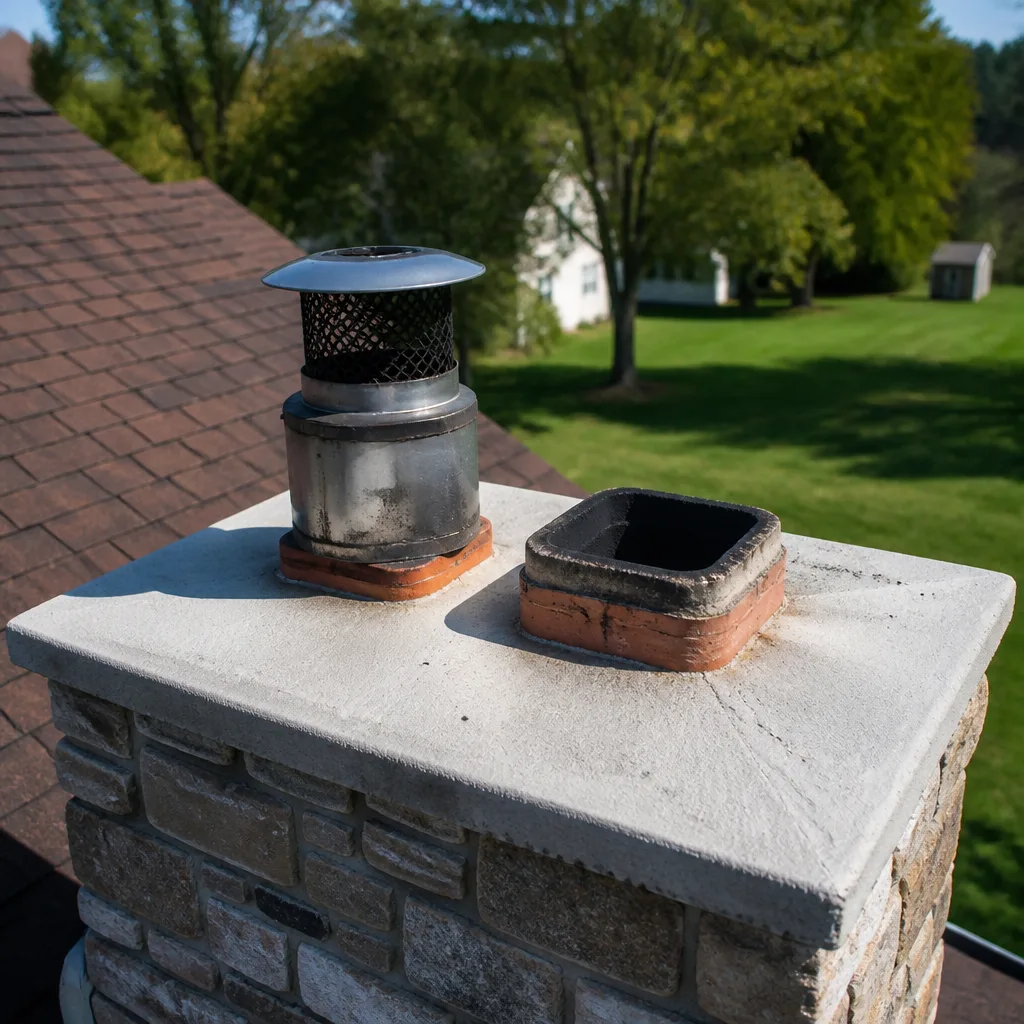 Sweep & inspection
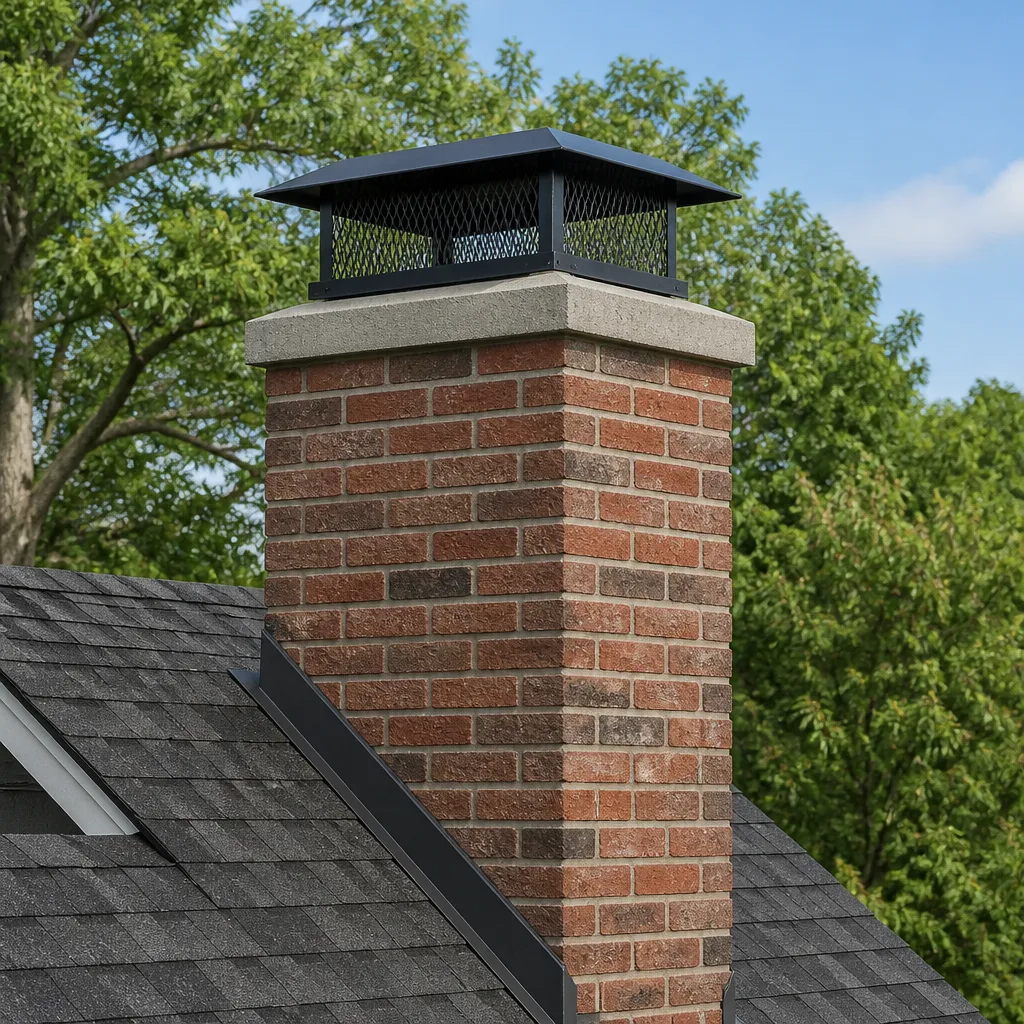 Caps & crowns
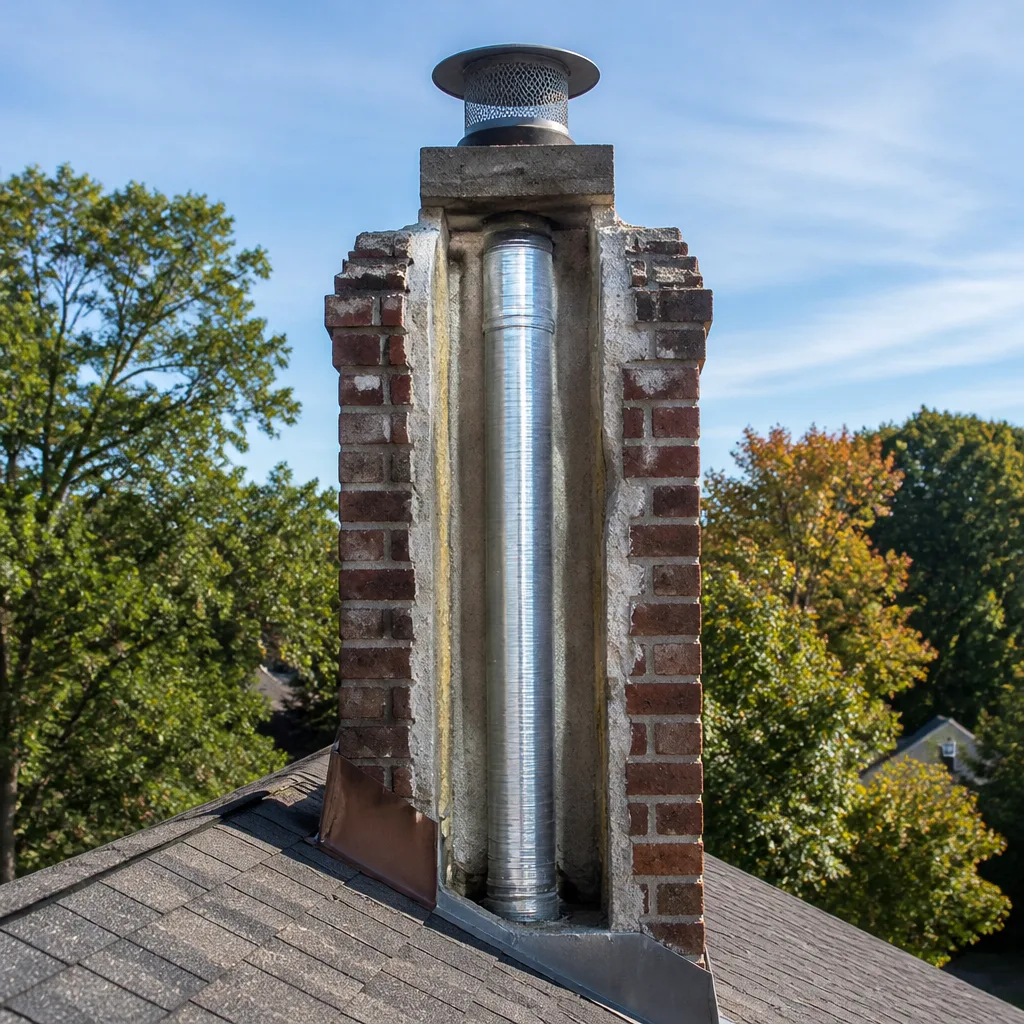 Flue relining
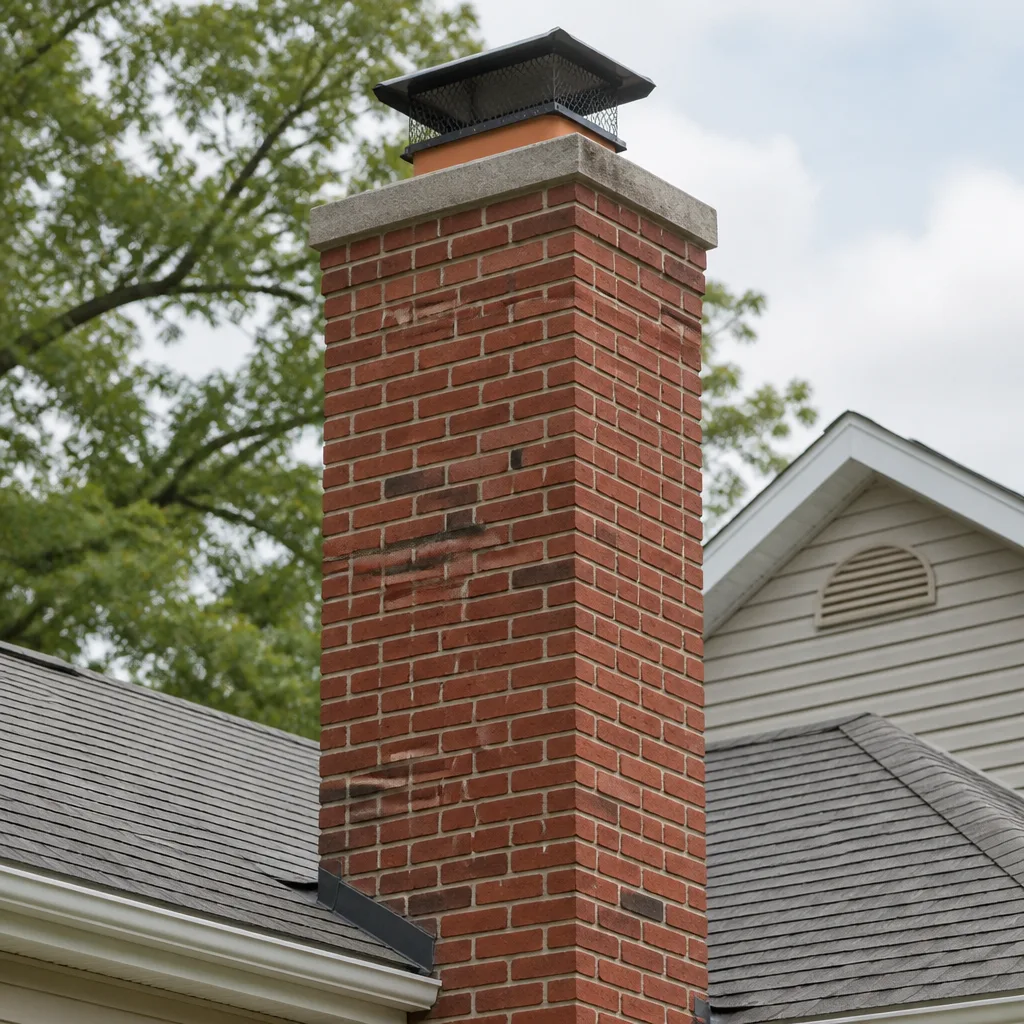 Masonry repair
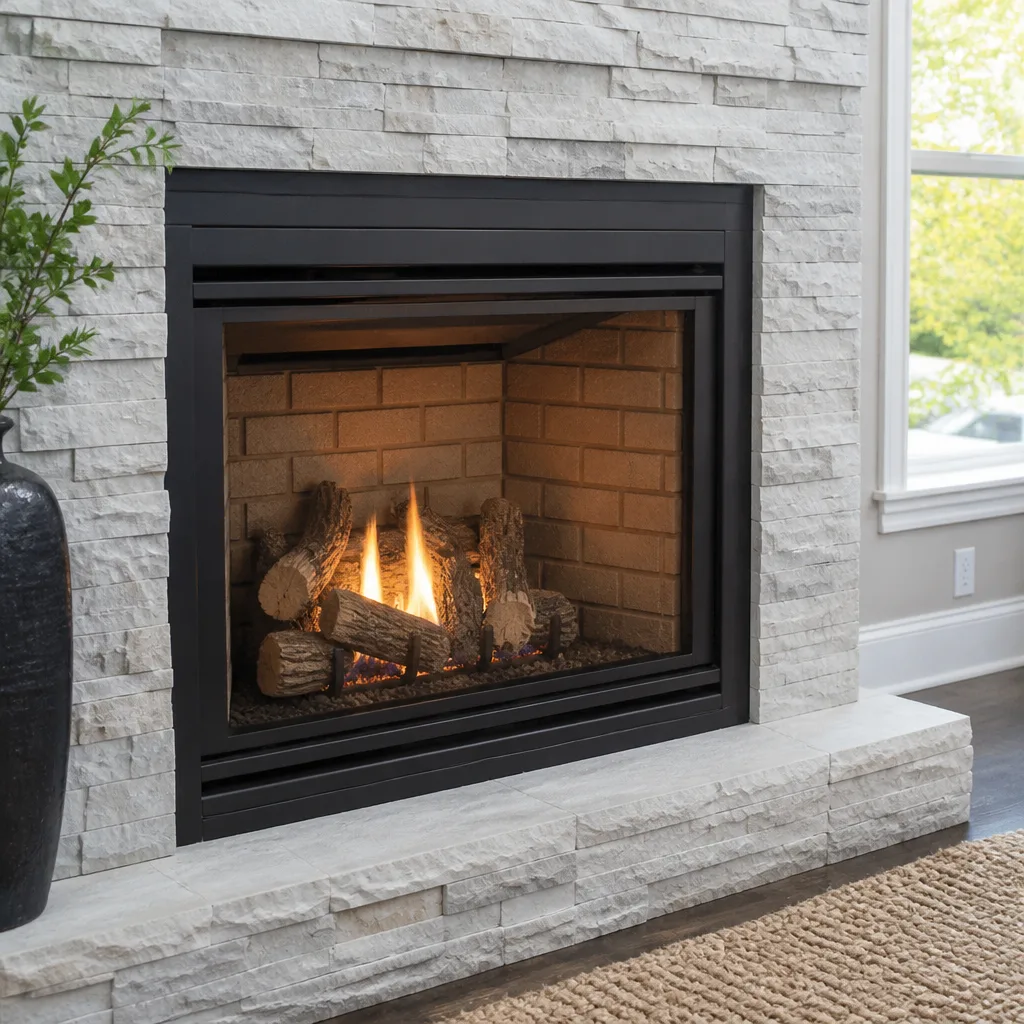 Gas fireplace service
Level 1 sweep and inspection to the NFPA 211 annual standard - flue, crown, cap, and flashing checked and photographed
Chimney sweep logs do not sweep chimneys. They loosen some creosote - which then falls where a brush and vacuum still have to collect it.
Choosing the Right Chimney Cleaning Brand: A Buyer’s Guide for Hell’s Kitchen
Any chimney sweep can show up with a brush and a vacuum. The question that separates a real chimney specialist from a brush-and-go operation is what they use when the job requires more than cleaning, and whether they can name the product, specify the grade, and explain why they chose it. Most homeowners never ask. They book whoever answers the phone, watch a technician run a rotary brush up the flue, pay, and assume the chimney is fine. The problem is that the parts nobody sees, the liner, the crown, the mortar at the smoke chamber, are where the real money and the real risk live, and the materials used there are not interchangeable. This guide is written from Hell’s Kitchen, where pre-war walk-ups and shared flues make the material question sharper than it is almost anywhere else. We’ll walk through what professional chimney brands actually are, why commodity materials fail faster in this climate, and how to interview a contractor so you get verifiable answers instead of a confident shrug.
Quick Answer
The right chimney cleaning brand for a Hell’s Kitchen home is a company that can name the professional-trade materials it installs (HeatShield, DuraFlex, Copperfield, Famco), show you the product specification, and explain why that grade suits a high-humidity, freeze-thaw climate. Cleaning supplies alone don’t make a chimney specialist; access to structural repair materials does. Ask for brand names, liner gauge, and mortar mix in writing before any work begins, and walk away from anyone who can’t provide them.
Styles & brands we work with
- Sweep & inspection
- Caps & crowns
- Flue relining
- Masonry repair
- Gas fireplace service
Table of Contents
- What “Brand” Really Means in Chimney Work
- The Trade Brands That Matter and What Each One Does
- Why Commodity Materials Fail Faster in Hell’s Kitchen
- Cleaning-Only vs. Full-System: Why the Difference Costs You
- How to Verify a Contractor’s Material Claims: 7 Questions
- What Should Be in Writing Before Work Starts
- HeatShield vs. Full Relining: What the Restoring Option Is
- Caps, Crowns, and the Water Problem Nobody Talks About
What “Brand” Really Means in Chimney Work
In most trades, a brand is marketing. In chimney work, a brand is a specification. When a technician says they’ll install a DuraFlex liner, that name carries a known wall thickness, an alloy, a listed temperature rating, and a tested method of joining sections. When a technician says they’ll use “flex liner,” that could be any of a dozen products with a range of gauges, and you have no way to compare one quote against another.
That distinction matters most on the parts of the job you can’t inspect with your own eyes. Once a liner is dropped and connected, once a crown is poured and cured, once a smoke chamber is parged, the material is sealed into the system. You’ll live with the consequences for years, and the visible result looks nearly identical whether the material was professional-grade or the cheapest thing on the supply truck.
In Hell’s Kitchen specifically, the stakes run higher because so many buildings are old walk-ups with original masonry chimneys and shared flues serving multiple apartments. A liner failure in a building like that can affect a neighbor’s unit, not just yours. The brand question stops being about craftsmanship pride and starts being about what’s actually behind your wall.
Here’s the principle we work from: we don’t just sweep, we diagnose. A diagnosis without the materials to act on it is just a sales pitch. So when we look at a chimney in Hell’s Kitchen, we’re looking at what it would take to correct what we find, and whether the materials on hand are right for the correction. If they aren’t, the answer is to get the right ones, not to improvise with what’s nearby.
The Trade Brands That Matter and What Each One Does
The professional chimney trade has a short list of brands that specialists recognize and generalists often don’t. You don’t need to memorize the catalog, but knowing what each name is for lets you ask a sharper question on the phone.
HeatShield
HeatShield is a ceramic resurfacing system for deteriorated flue liners. Instead of tearing out an old clay liner and installing a full stainless liner, HeatShield technicians apply a ceramic compound that bonds to the existing flue and restores its structural integrity. It’s appropriate when the liner is cracked or spalling but not fully collapsed, and it’s typically less expensive than a full reline. We’ll cover this in more depth below, because it’s one of the biggest dividing lines between companies.
DuraFlex
DuraFlex makes flexible stainless steel liner systems. These are the workhorse of the relining trade, used when a flue needs a new continuous liner inside it. The brand matters because the alloy and wall thickness vary by application, and a specialist should be able to tell you which grade they’re specifying for your appliance and why.
Copperfield
Copperfield is a recognized name in chimney caps, crowns, and related masonry and metal components. When a company works with Copperfield, you’re getting a specified cap or crown instead of a generic piece cut to fit on site. That matters for water shedding and for how the finished chimney looks from the street.
Famco
Famco covers a range of chimney components, including caps and tops. Like the others, the value is in the specification. A Famco cap has a known design and material; a generic cap from a hardware store does not.
The point of naming brands isn’t brand loyalty for its own sake. It’s that each name stands for a written specification you can verify. When you ask a chimney company in Hell’s Kitchen what they’ll install, the answer should include at least one of these names, and the technician should be able to tell you why that particular product suits your flue.
Why Commodity Materials Fail Faster in Hell’s Kitchen
Hell’s Kitchen sits in a climate that is genuinely hard on masonry and on the metals that go inside it. The dominant pattern is high humidity for much of the year combined with repeated freeze-thaw cycles through the colder months. That combination attacks chimney materials from several directions at once.
What freeze-thaw does to cheap mortar
Water gets into a mortar joint or a crown, freezes, and expands. The expansion pushes the material apart from the inside. When it thaws, the material is looser than it was before. Repeat that through a winter and a poor mix will spall, crack, and crumble. A properly specified mortar mix, matched to the chimney’s masonry, resists that cycle far better. Commodity chimney cement, often sold as a one-size-fits-all repair product, is not matched to anything.
What humidity does to cheap flexible liner
A flexible stainless liner inside a masonry flue spends its life in a damp environment, exposed to condensate from combustion gases. The lower the alloy grade and the thinner the wall, the sooner that environment wins. A liner that looks solid in year one can show pitting, seam separation, or corrosion at the connection points by year three to five. The failure is often invisible from the firebox, which is why a camera inspection matters more than a visual check.
Why pre-war buildings make it worse
Many Hell’s Kitchen buildings date to the early twentieth century, when chimneys were built for coal or for unlined wood fires and later adapted. Those flues often lack a proper modern liner, or have a clay liner that has already been through decades of thermal cycling. Putting a cheap flexible section into a flue like that is the worst of both worlds: an old, deteriorating surround and a thin liner that can’t compensate. Professional-grade materials don’t make an old chimney new, but they give the system a fighting chance in a climate that punishes shortcuts.
What does the failure look like? In practice, three things show up. First, a flue that no longer drafts reliably and smokes into the room. Second, visible corrosion or crumbling at the top of the chimney where water gets in. Third, and most serious, a liner that has developed gaps the camera can see, which is a fire and carbon monoxide concern. None of those show up in a photo of a shiny new installation; they show up years later.
Cleaning-Only vs. Full-System: Why the Difference Costs You
A cleaning-only service provider does one thing: they remove creosote and soot from the flue and firebox. That’s a legitimate service and a necessary one. The problem starts when cleaning reveals a problem and the provider has no way to address it.
Here’s how that usually plays out. The technician sweeps, looks up the flue, sees a cracked crown or a deteriorated liner, and tells you about it. Then they hand you a business card for a mason and a phone number for a liner company. You now have two more contractors to vet, two more schedules to coordinate, and nobody accountable for how the pieces fit together. The crown repair and the liner installation were diagnosed together but executed separately, and if something goes wrong later, each trade points at the other.
A full-system chimney company closes that gap. The five core services we provide in Hell’s Kitchen are:
- Chimney sweep – removal of creosote, soot, and debris, with the flue checked while we’re in it.
- Chimney cap and crown – installation and repair of the parts that keep water out of the top of the chimney.
- Chimney repair – masonry, mortar, and structural corrections to the chimney itself.
- Chimney inspection – a documented assessment of the whole system, with camera work where it’s warranted.
- Fireplace repair – the firebox, damper, and surround, which sit at the boundary between chimney work and general contracting.
That fifth service is worth pausing on. Fireplace repair sits in a gap between chimney contractors and general contractors. A mason may not want to touch a firebox; a general contractor may not understand flue geometry. Keeping the fireplace repair in the same scope as the chimney work means the person who diagnosed the problem is accountable for the fix. When you book a chimney sweep, the findings from that sweep should go directly to the people who can act on them, not into a referral file.
If you’re not sure what you need yet, the honest starting point is a chimney inspection that gives you a documented picture of the whole system. From there, the scope is a conversation, not a guess.
How to Verify a Contractor’s Material Claims: 7 Questions
“We use the best materials” is a sentence that means nothing until it’s specific. The good news is that a specialist will welcome these questions, and a brush-and-go operation will get uncomfortable. Ask them before you book, not after the work starts.
- Which brand of liner do you install, and what gauge and alloy? If the answer is “flexible stainless,” ask again for the brand and the specification. DuraFlex or an equivalent named product is a real answer; a description of the material is not.
- Are you an authorized installer for that brand? Authorization usually comes with training on correct techniques and access to the manufacturer’s warranty terms. Not every legitimate installer is authorized, but asking the question tells you whether they’ve thought about it.
- Can I see the product specification sheet? A spec sheet lists the material, the wall thickness, the temperature rating, and the listing standard. Anyone who installs the product regularly has one, or can get one.
- Will I get the brand and product name in writing before work begins? This is the single most useful question. A written scope with a named product is verifiable; a verbal promise is not.
- What mortar mix are you using for the crown or the masonry repair, and why that one? A specialist will explain the mix and how it suits your chimney’s masonry. A generalist will say “chimney cement.”
- Is the material warranty transferable if I sell the property? In a Hell’s Kitchen co-op or condo, units change hands, and a transferable warranty is a real asset to the next owner.
- Do you do HeatShield resurfacing, or do you only offer full relining? If the only tool is a full reline, every diagnosis will end in one. The ability to resurface is what lets a company recommend the appropriate option rather than the only option it can perform.
Write the answers down. If two companies give you two different brand names, that’s fine; the question is whether each can explain the choice. What should concern you is a company that can’t name anything at all.
What Should Be in Writing Before Work Starts
A written scope is the contract, and it should be specific enough that a third party could check the work against it. Here’s what we’d expect to see, and what you should insist on from any chimney company in Hell’s Kitchen.
- The brand and product name for every liner, cap, crown, or component being installed. “Stainless liner” is not a product name; “DuraFlex” with the gauge is.
- The liner specification if relining is involved: alloy, wall thickness, and the listing standard it’s tested to.
- The mortar mix type for any crown or masonry work, and the method for applying it.
- The scope of the inspection that led to the recommendation, including whether camera footage was taken and whether you’ll receive it.
- What’s excluded. If the crown is being replaced, is the flue being inspected at the same time? If the firebox is being repaired, is the damper being checked? Exclusions tell you where the next problem will surface.
- The warranty terms, including whether they’re transferable, in the manufacturer’s own language where possible.
One more thing: ask whether the estimate is free and whether the price is set per job by that written estimate. A quote that changes after the work starts is a different quote. The written estimate sets the final price, and anything beyond it should come back to you for approval, not appear on the invoice.
HeatShield vs. Full Relining: What the Restoring Option Is
This is the decision where material access changes the recommendation most. When a flue liner is deteriorating, there are two paths: install a full new stainless liner inside the old one, or resurface the existing liner so it regains structural integrity. The second path is what HeatShield is for.
HeatShield is a ceramic compound applied to the inside of a deteriorating flue. It bonds to the existing clay liner and forms a smooth, sealed surface. It’s appropriate when the liner is cracked, spalling, or has gaps at the joints, but the flue geometry and the surrounding masonry are still sound. When that’s the case, resurfacing restores the flue without tearing out the old liner or installing a full-length stainless system, and it’s typically the less expensive of the two options.
Full relining is the right answer when the existing liner is collapsed, badly misaligned, or where the appliance requires a listed liner that a resurfaced flue can’t provide. A specialist should be able to tell you which situation you’re in and show you why, ideally with camera footage of the flue before and after.
The reason this matters for choosing a brand is simple. A company that only does full relining will recommend full relining. A company that does both will recommend the option that fits your flue. HeatShield resurfacing lets us restore a flue without the cost of full relining, and having that capability is part of what separates a full-system chimney company from a cleaning-and-relining outfit. When we look at a chimney in Hell’s Kitchen, we’re checking whether resurfacing is a fit before we default to replacement.
Caps, Crowns, and the Water Problem Nobody Talks About
Water is the leading cause of structural chimney damage, and the cap and crown are where water gets in. A crown is the concrete or masonry top surface of the chimney; a cap is the cover that sits over the flue opening. Both are small, both are out of sight, and both are frequently skipped by cleaning-only services.
A failed crown lets water soak into the masonry below it. Through freeze-thaw, that water widens cracks and loosens joints. A missing or damaged cap lets rain and animals straight into the flue. Neither problem announces itself; you find out when the masonry starts spalling or the flue stops drafting. Cap and crown work isn’t an upsell, it’s a necessity, and it’s the most cost-effective structural protection a chimney has.
This is where brand specification shows up in a way you can actually see. A properly specified cap from a recognized manufacturer sheds water the way it’s designed to; a generic cap cut and bent on site often doesn’t. The same goes for the crown material and the mortar mix used to form it. When you’re evaluating a company for chimney cap & crown work, ask what brand of cap they install and how the crown is formed. A specialist will have a specific answer.
Because we handle cap and crown alongside chimney repair, the water problem gets treated as one system rather than two separate jobs. If the crown is failing, the masonry below it usually needs attention too, and it’s better to plan both at once than to fix the crown and discover the spalling six months later.
Common Mistakes to Avoid
- Booking on price alone. A quote that’s significantly lower than the others is usually lower because the materials are commodity. Ask what brand is being installed before you compare numbers; a cheap liner that fails in three to five years is not a saving.
- Accepting “we use the best materials” as an answer. It’s not an answer, it’s a deflection. Ask for brand names, liner gauge, and mortar mix in writing. A specialist will give them without hesitation.
- Skipping the inspection because the sweep “looked fine.” A visual check from the firebox doesn’t show the upper flue, the smoke chamber, or the crown. In Hell’s Kitchen’s pre-war buildings, the problems are usually in the parts you can’t see from the hearth.
- Letting a cleaning-only provider hand off the repair. When the sweep finds a cracked crown and refers you to a mason, nobody owns the whole system. The diagnosis and the repair should come from the same accountable trade specialist.
- Ignoring the cap and crown because they’re out of sight. Water intrusion from a failed crown is the leading cause of structural chimney damage, and it’s slow. By the time the masonry spalls, the repair is larger than the cap would have been.
- Choosing a company that can only do one thing. If the only option offered is full relining, every diagnosis will end there. Ask whether HeatShield resurfacing is available before you accept a reline quote.
- Not getting the warranty terms in writing. In a Hell’s Kitchen co-op or condo, a transferable material warranty has real value at resale. Ask about it before work begins, not after.
See the difference
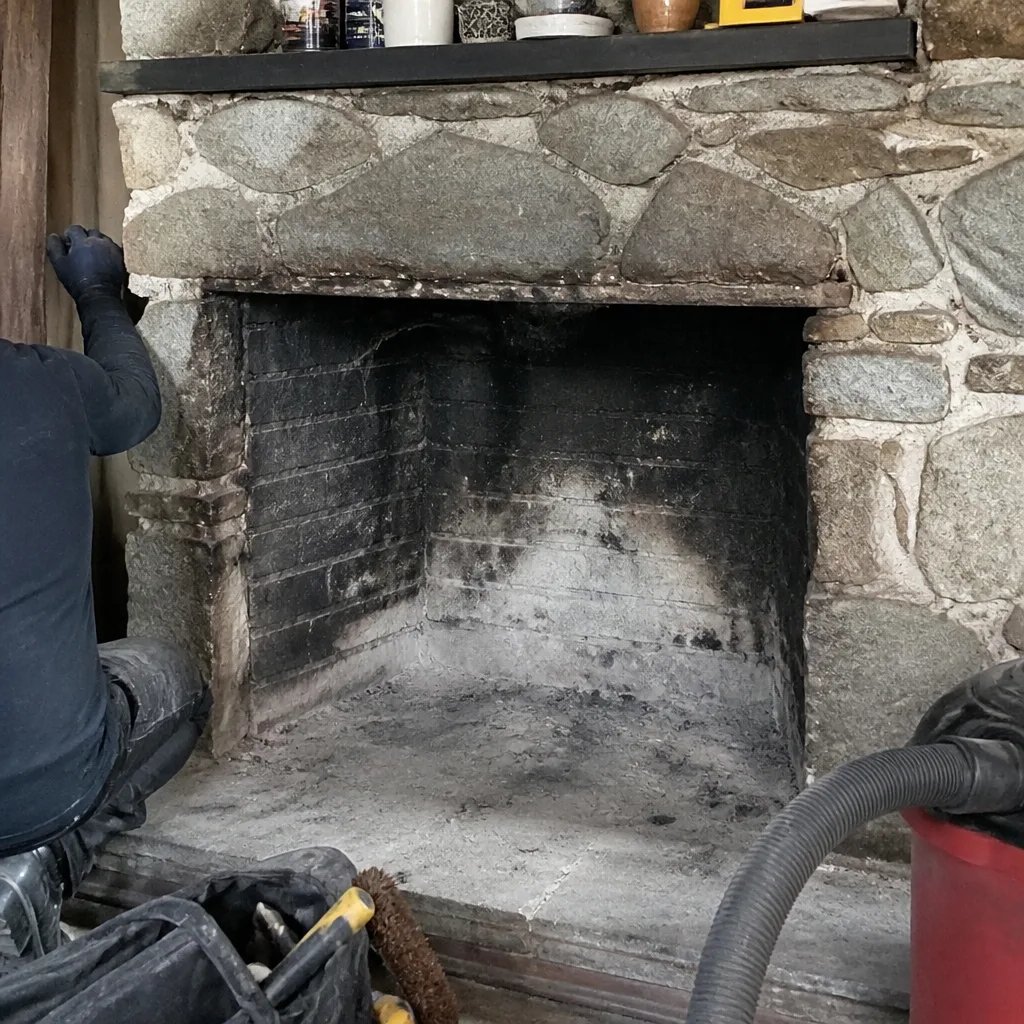 Before
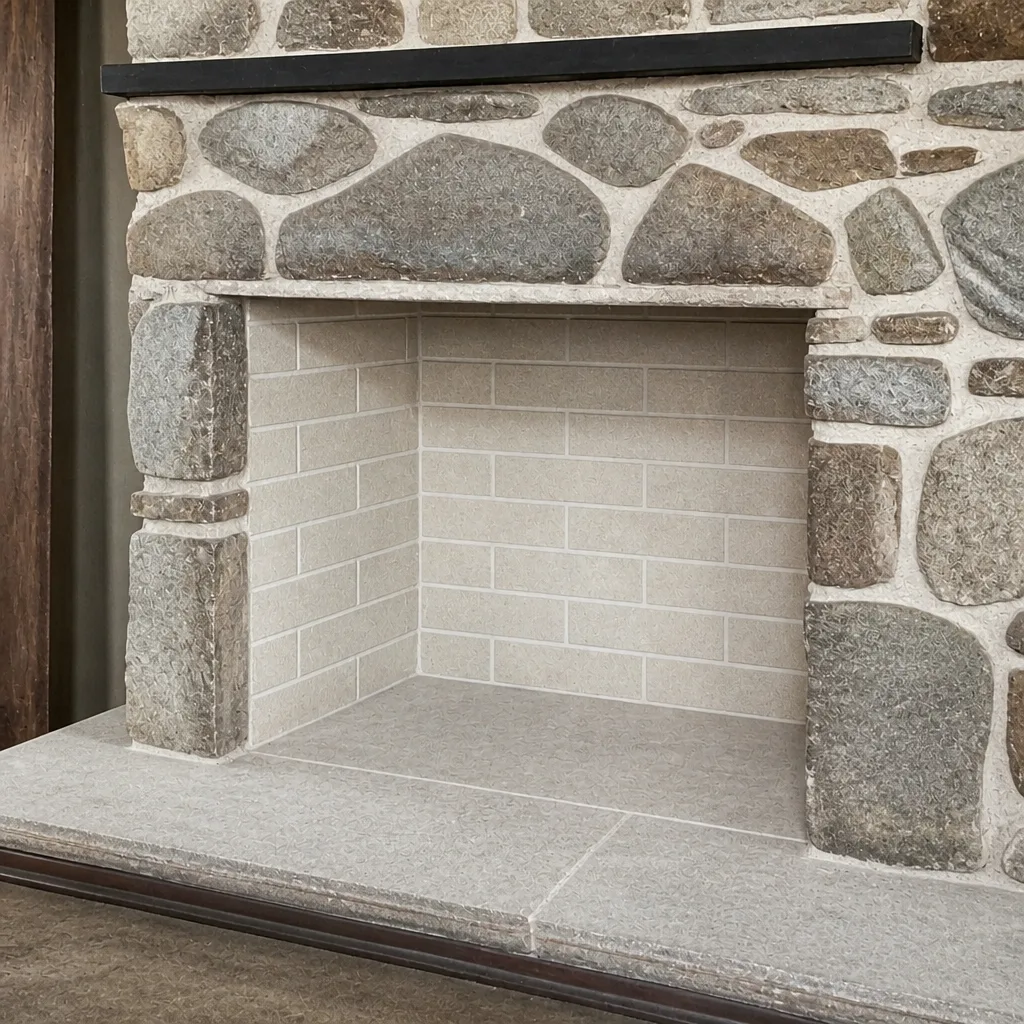 After
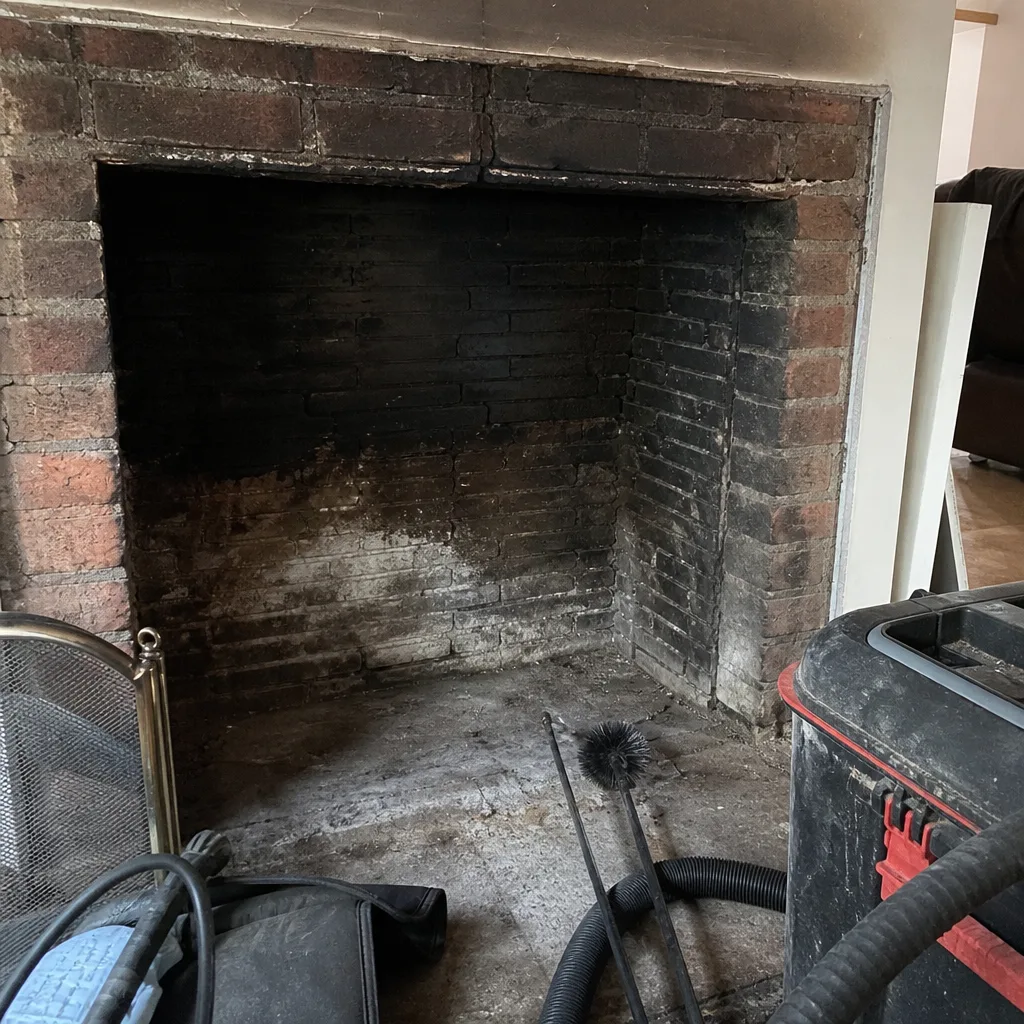 Before
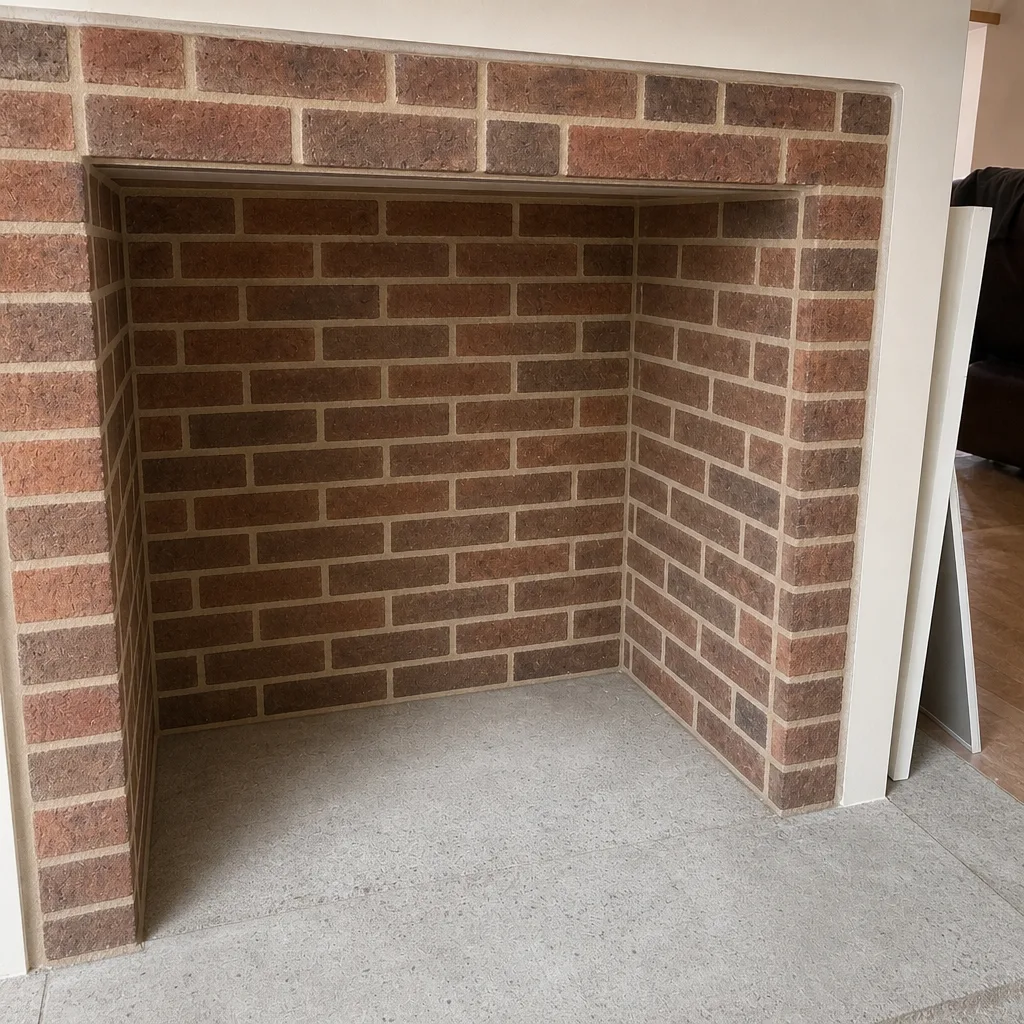 After
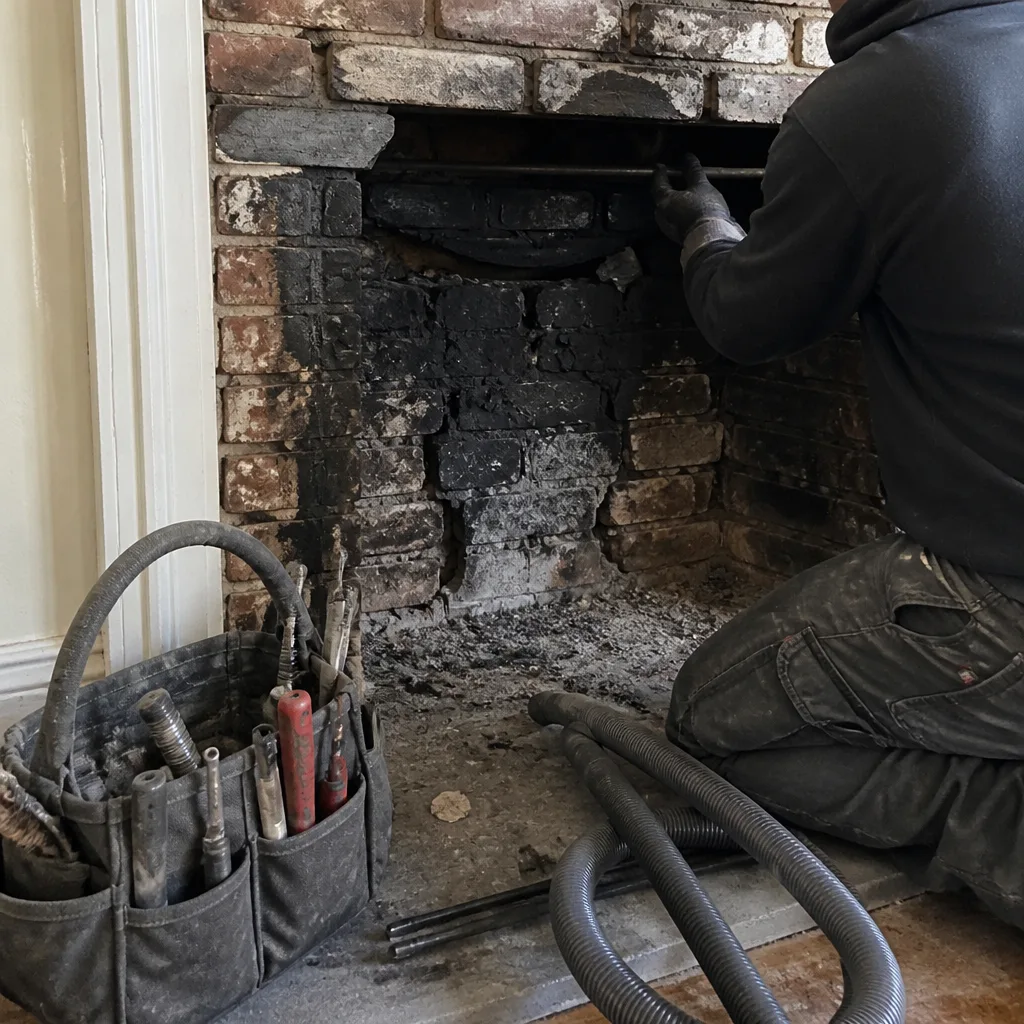 Before
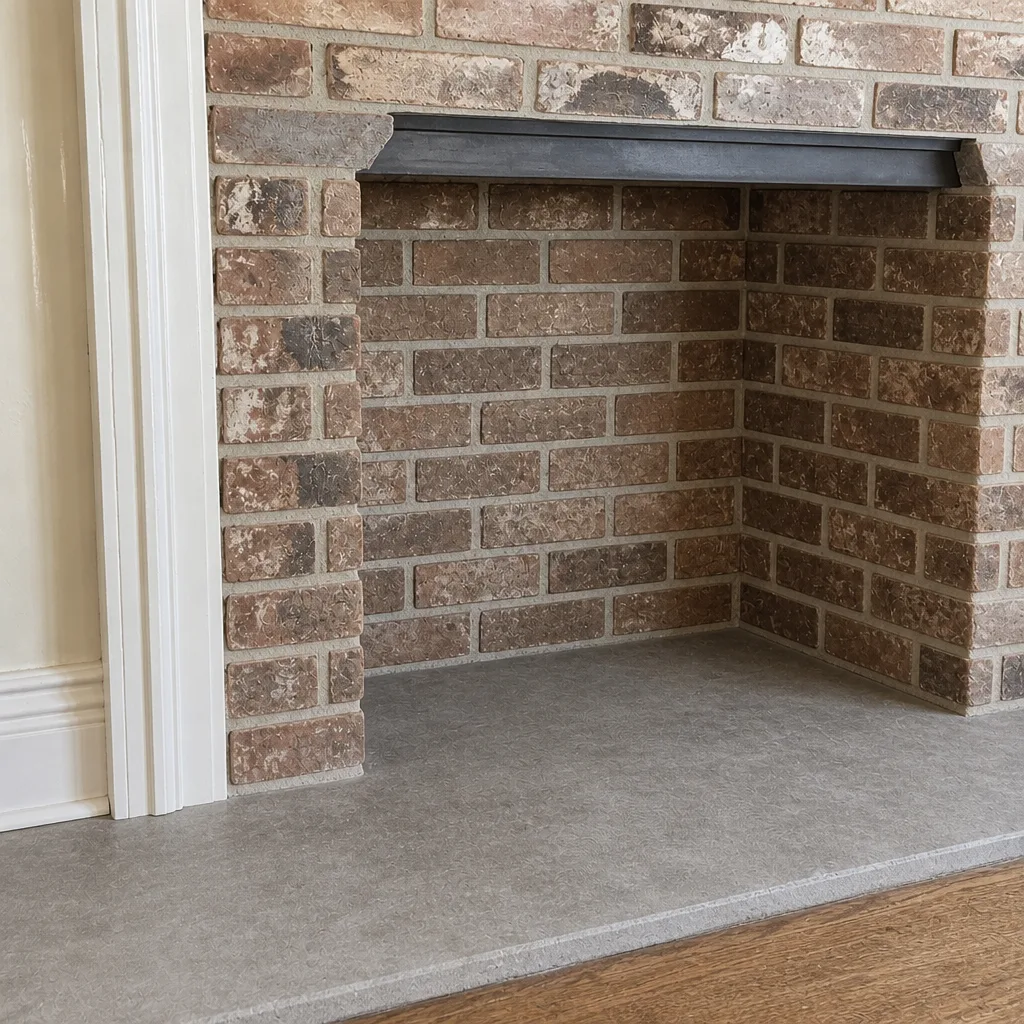 After
When to Call a Professional
Some chimney work is routine, and some of it shouldn’t wait. Call a professional if you smell smoke in the room when the fireplace isn’t lit, if the fire drafts poorly or smokes back into the room, if you see crumbling mortar or spalling brick at the top of the chimney, or if water is getting into the firebox. Call if the damper sticks or won’t close fully, if the firebox has cracks in the brick or mortar, or if you’ve never had the flue inspected and the chimney is in an older Hell’s Kitchen building. And call if a previous sweep told you something was wrong but didn’t explain what or show you why; a proper inspection with camera evidence should answer that. Chimney Sweep Hell’s Kitchen offers free estimates in Hell’s Kitchen. Call (866) 947-8139. We answer 24/7. Fast dispatch from 7am to 7pm, Sunday through Friday.
Frequently Asked Questions
A brand in this context is the material specification a company installs, not its logo. The companies worth hiring are the ones that can name the products they use, such as HeatShield, DuraFlex, Copperfield, or Famco, and explain why those products suit your chimney. A cleaning-only company may not have any structural materials at all. Call (866) 947-8139 for an exact quote; estimates are free.
Ask for the brand name, the liner gauge and alloy, and the mortar mix in writing before work begins. A specialist will provide them without hesitation and can show you the product specification sheet. If the answer is “we use the best materials” with no specifics, you have your answer. Call (866) 947-8139 to talk through what your flue needs.
Hell’s Kitchen’s high humidity and repeated freeze-thaw cycles are hard on both masonry and metal. Thin-wall flexible liners corrode and pit faster in a damp flue, and poorly matched mortar spalls through winter cycles. A professional-grade liner and a matched mortar mix resist those conditions far better than commodity products. Call (866) 947-8139 for an exact quote; estimates are free.
HeatShield is a ceramic resurfacing system applied to the inside of a deteriorating flue liner. It’s appropriate when the liner is cracked or spalling but the flue is otherwise sound, and it’s typically less expensive than a full reline. It isn’t right for a collapsed or badly misaligned liner. An inspection with camera footage tells you which situation you’re in. Call (866) 947-8139 to book one.
Yes, if it’s a full-system chimney company with the five core services: sweep, cap and crown, repair, inspection, and fireplace repair. That keeps the diagnosis and the repair under one accountable trade specialist, so findings from the sweep go directly to the repair team. Call (866) 947-8139 to discuss the full scope.
It depends on the manufacturer’s terms and how the installer handles the paperwork. Ask before work begins, and get the answer in writing, because a transferable warranty is an asset to the next owner in a co-op or condo sale. A specialist will know how the warranty works for the product they’re installing. Call (866) 947-8139 for details on your project.
The Bottom Line
Choosing a chimney cleaning brand in Hell’s Kitchen comes down to verifiable specifics. Ask which trade brands the company installs, get the liner gauge, alloy, and mortar mix in writing, and confirm whether they can resurface a flue with HeatShield or only replace it. A company that can answer those questions is a full-system specialist; one that can’t is a brush-and-go operation. The materials you can’t see are the ones that determine whether your chimney is safe in three years, so make the brand conversation part of the first phone call. The written estimate sets the final price, and the inspection should show you camera evidence before anything is recommended. Start with a chimney sweep and a documented inspection, and let the findings drive the scope.
Call (866) 947-8139 for a free estimate. We answer 24/7. Fast dispatch from 7am to 7pm, Sunday through Friday.
Written by the team at Chimney Sweep Hell’s Kitchen.